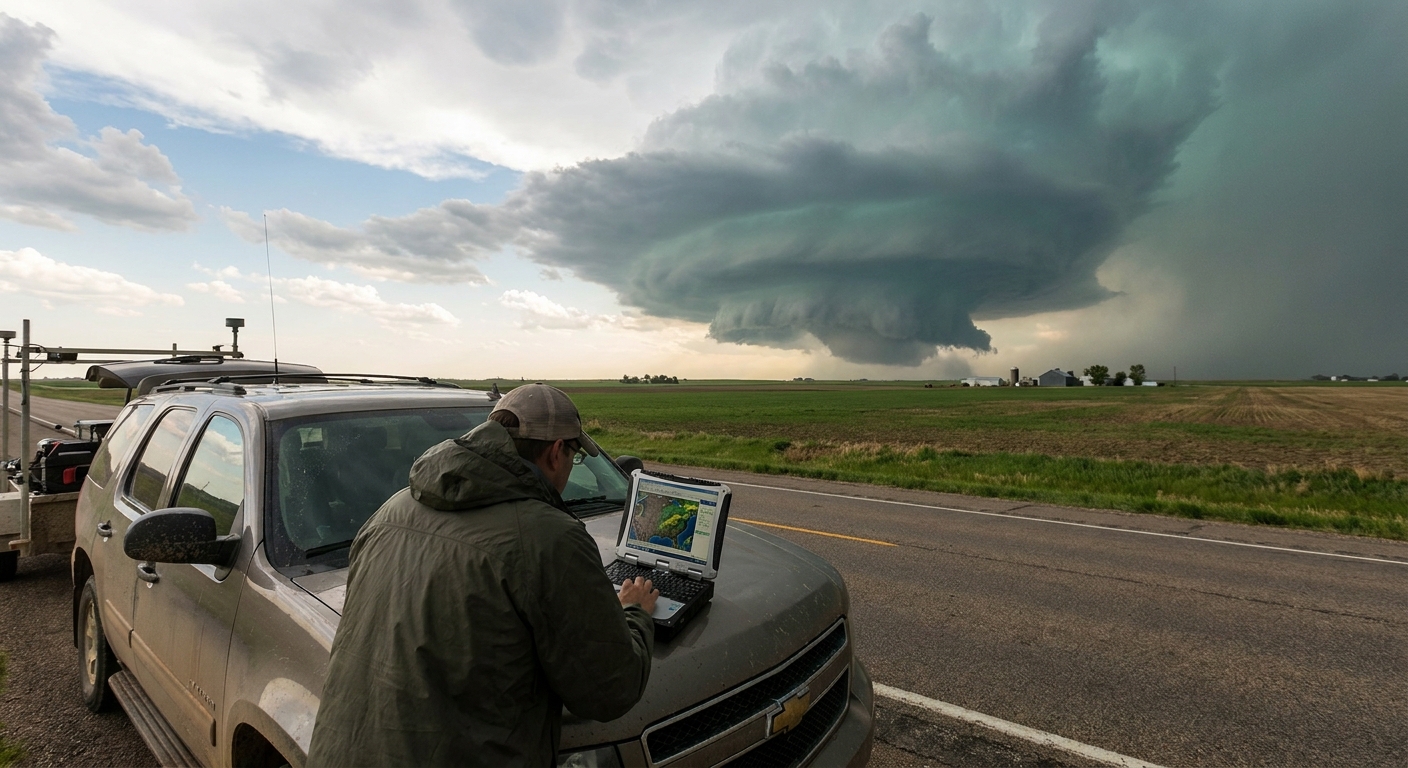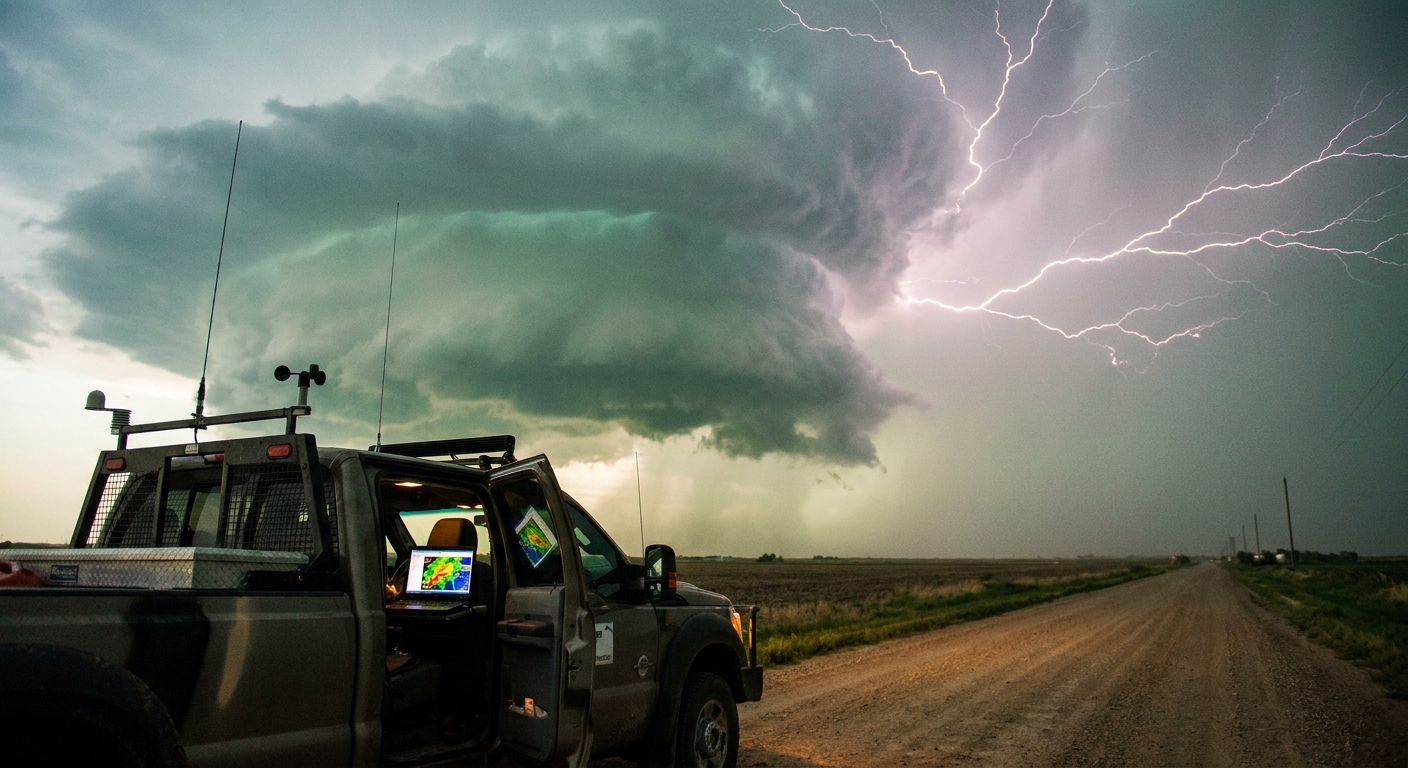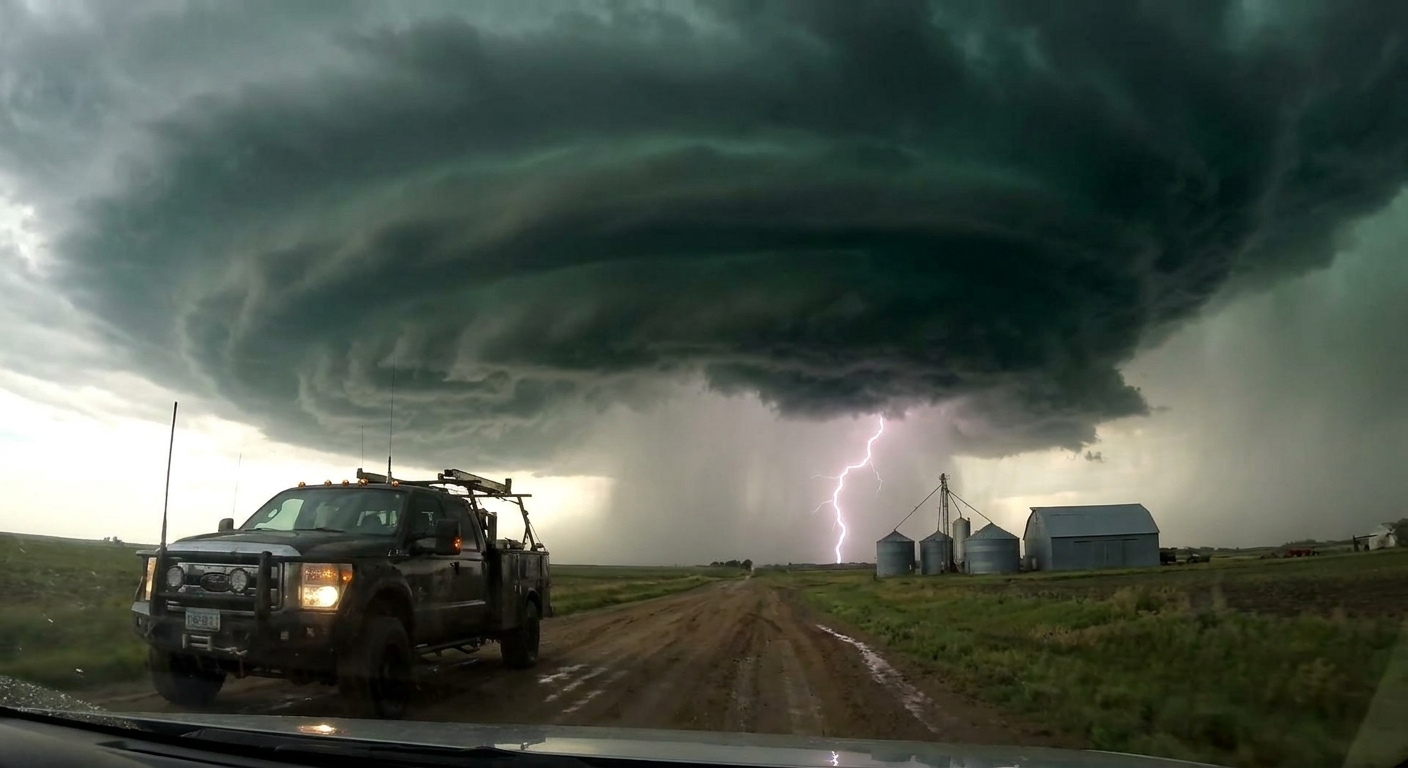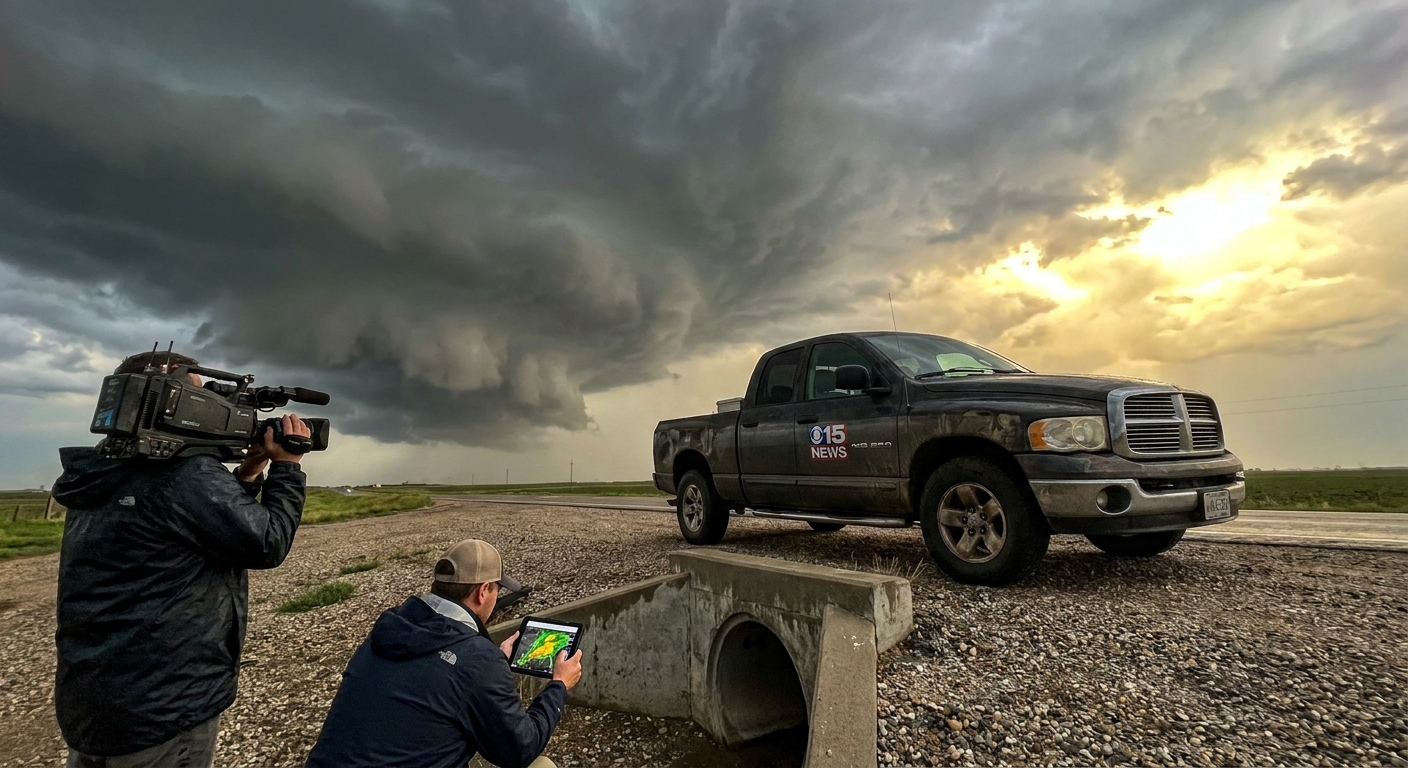
The storms we chase are absolutely capable of killing us. That’s not hyperbole; it’s physics.
The Line Between Witness and Victim
We strap ourselves to thousands of pounds of metal and glass, point them toward rotating updrafts with 70 mph inflow and giant hail, then thread the needle between awe and aftermath.
If you’re going to step into that arena, you owe it to yourself—and everyone sharing those roads—to chase like you understand the consequences.
This is a blunt, field-tested comparison between storm chasing and storm surviving: where we flirt with the line, and how not to cross it.
1. Mindset: Adrenaline Tourist vs. Field Operator
The first difference isn’t gear or experience; it’s mindset.
The Adrenaline Tourist
- Treats the chase like an extreme sport.
- Seeks the closest possible intercept "for the shot."
- Makes decisions emotionally when structure goes nuclear.
The Field Operator
- Views chasing as a dynamic risk-management problem.
- Seeks sustainable proximity: close enough to document, far enough to survive surprises.
- Under stress, falls back on pre‑planned protocols, not improvisation.
Surviving long-term in this hobby means discarding the idea that you’re invincible or that "it won’t happen to me." The atmosphere doesn’t care.
2. Targeting: Hero Plays vs. Smart Plays
How you choose where to chase sets the tone for the entire day.
Hero Plays
- Targeting the most extreme risk zone with no exit options (e.g., dense woods, poor road grids).
- Allowing social media hype to override your own forecast.
- Ignoring mesoscale updates (boundary shifts, outflow interference).
Smart Plays
- Choosing areas with robust road networks and known terrain.
- Building a primary and secondary target that both respect topography and storm motion.
- Updating your plan hourly with surface obs, mesoscale discussions, and visible satellite.
Remember: a photogenic EF2 in open country is infinitely safer (and often more interceptable) than a violent HP messing with city edges after dark.
3. Positioning: Trophy Shots vs. Defensive Driving
The most dangerous moments of chasing aren’t just when the tornado is near—it’s when visibility collapses and options vanish.
The Trophy Approach
- Driving into the notch with marginal visibility.
- Letting the hook pass over or behind you.
- Trusting one road, one direction, one escape.
The Defensive Approach
- Staying ESE to SE of the mesocyclone whenever possible.
- Keeping at least one good east and one south option open at all times.
- Avoiding being directly north of the meso, where hail, rain, and possible embedded vortices lurk.
Ask yourself every few minutes: If the storm accelerates and hooks right, where am I in five minutes? If the answer is "I’m not sure," you’re too close or poorly placed.
4. Radar Use: Confirmation Bias vs. Situational Awareness
Radar is both our best friend and our favorite trap.
Chasing Your Hopes
- Only looking at reflectivity, ignoring velocity and storm motion.
- Waiting to see the "perfect" hook before adjusting position.
- Treating radar delay (often several minutes) like live video.
Chasing the Atmosphere
- Regularly checking both reflectivity and velocity.
- Watching for trends—tightening couplets, evolving hooks, surging RFD—not just snapshots.
- Mentally compensating for data delay: you’re seeing where the storm was, not where it is.
Remember: if radar shows a strong couplet near you, the atmosphere may already be a step ahead. Your moves must anticipate, not react.
5. Hazards: Obvious Threats vs. The Ones That Get You
We all fear the obvious: the wedge tornado marching across the field. But most chaser injuries and close calls come from everything else.
The Usual Suspects
- Tornadoes
- Giant hail
- Severe crosswinds
The Silent Killers
- Hydroplaning and flooding: You can’t out‑drive water.
- Downed power lines: Invisible in water or darkness, often energized.
- Debris fields: Nails, glass, twisted metal shredding tires and fuel tanks.
- Other drivers and chaser convergence: Gridlock near small towns, shoulder parking, sudden U‑turns.
Storm surviving means respecting the aftermath as much as the storm itself. Your safest escape plan means nothing if you drive into unseen damage.
6. Equipment: Overconfidence vs. Real Resilience
There’s a dangerous belief that armored vehicles and gadgets equal safety.
Overconfidence Traps
- Thinking hail cages make you invincible.
- Assuming multiple data sources eliminate uncertainty.
- Trusting vehicle performance off‑pavement beyond your actual skill.
Real Resilience
- Redundancy in navigation, comms, and power.
- Physical maps for when data drops and GPS fails.
- A basic emergency kit: first aid, water, food, blankets, tools, flares/reflectors.
Ask yourself: if I lost data, GPS, and cell service right now, could I still navigate to safety in the next 30 minutes? If not, you’re chasing borrowed confidence.
7. Group Dynamics: Lone Wolf vs. Herd Mentality
Chasing alone and chasing in a crowd both carry unique risks.
Lone Wolf Pitfalls
- No one to reality‑check risky choices.
- No backup if you’re injured, stuck, or disabled.
- Increased stress with data/drive/maneuver multitasking.
Herd Pitfalls
- Following other chasers instead of your own analysis.
- Traffic jams near critical intersections.
- Pressure to get "as close as that other guy."
The safe middle ground: small, coordinated teams or loose coordination via radio/text with trusted chasers—enough brains to share workload, not enough vehicles to plug roads.
8. Ethics: Content First vs. Community First
Every time we roll into a community that’s just been hit, our role changes.
Content-First Behavior
- Filming damage and victims up close.
- Blocking roads or driveways for "better angles."
- Sharing live locations that hinder emergency response.
Community-First Behavior
- Staying out of the way of emergency vehicles.
- Offering accurate, timely reports to NWS and local authorities.
- Only assisting if you can do so safely and without causing more chaos.
Storm chasing exists by the grace of the communities we pass through. Respect isn’t optional—it’s the price of admission.
9. Personal Rules: Drawing Your Own Line Before the Sky Does
Everyone’s risk tolerance is different. What matters is having clear, written rules before the day begins.
Examples:
- No core punching. Period.
- Minimum 1–2 mile standoff distance from confirmed tornadoes.
- No night chasing in unfamiliar or forested terrain.
- Mandatory daily vehicle checks (tires, fuel, fluids, lights).
Write them. Share them with your chase partners. Hold each other accountable when the inflow starts roaring and structure becomes surreal.
10. Why Survival is the Only Way to Truly Chase Long-Term
Storm chasing is not just about the single best shot of your life. It’s about the next storm, and the next, and the next.
You will absolutely see situations that tempt you to push harder: a wrapped barrel under golden light, a high-contrast cone in open country, or that HP monster you think you can thread.
Storm chasing means pursuing those moments. Storm surviving means doing it in a way that lets you grow older, wiser, and better at reading the atmosphere every year.
The storms will come—relentless, indifferent, magnificent. They don’t care if you’ve seen ten tornadoes or a hundred, if you’re streaming live or just watching in awe from a gravel road.
Your only real power is the ability to say: "This is close enough. I’m here to witness, not become part of the damage track."
Draw the line. Respect it. Then chase with every bit of urgency and fascination you have—knowing you’ve done the work to come home.