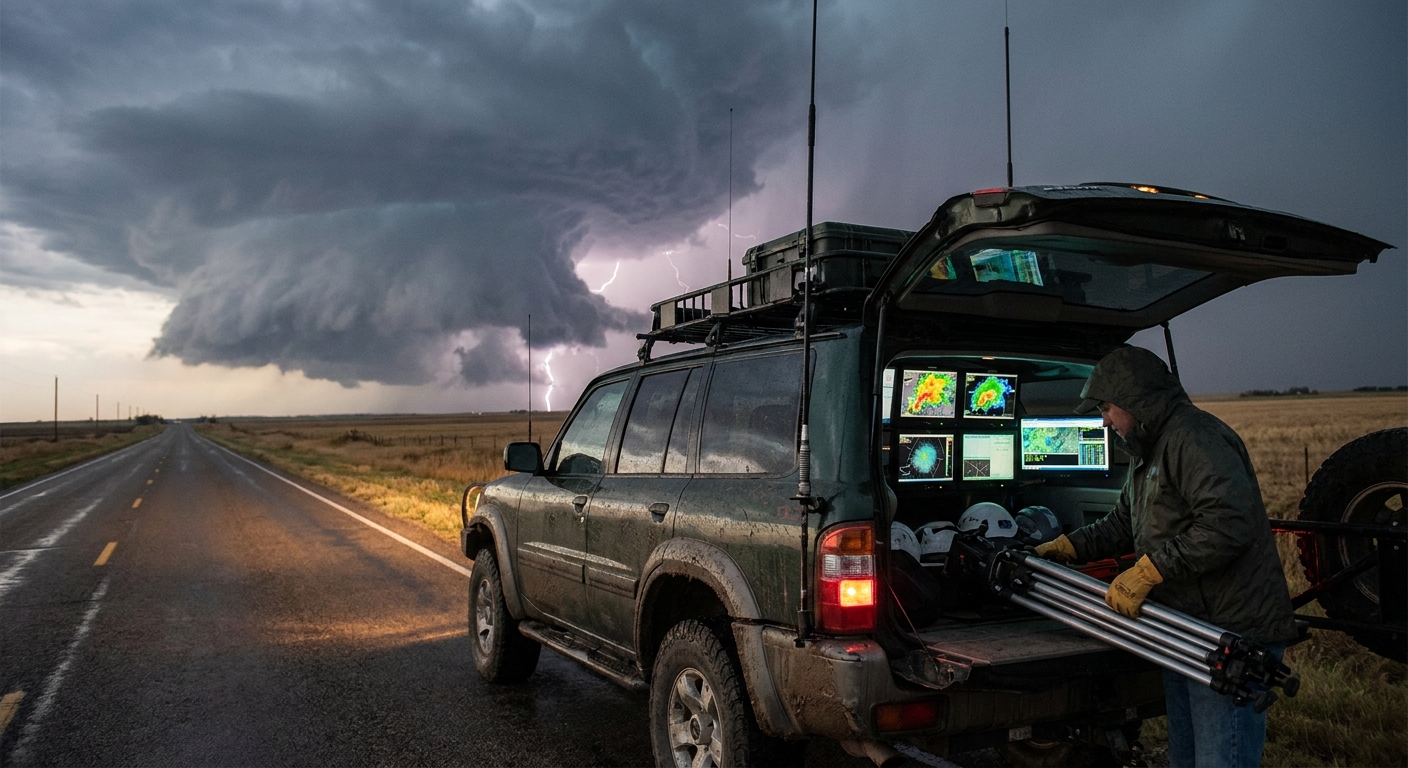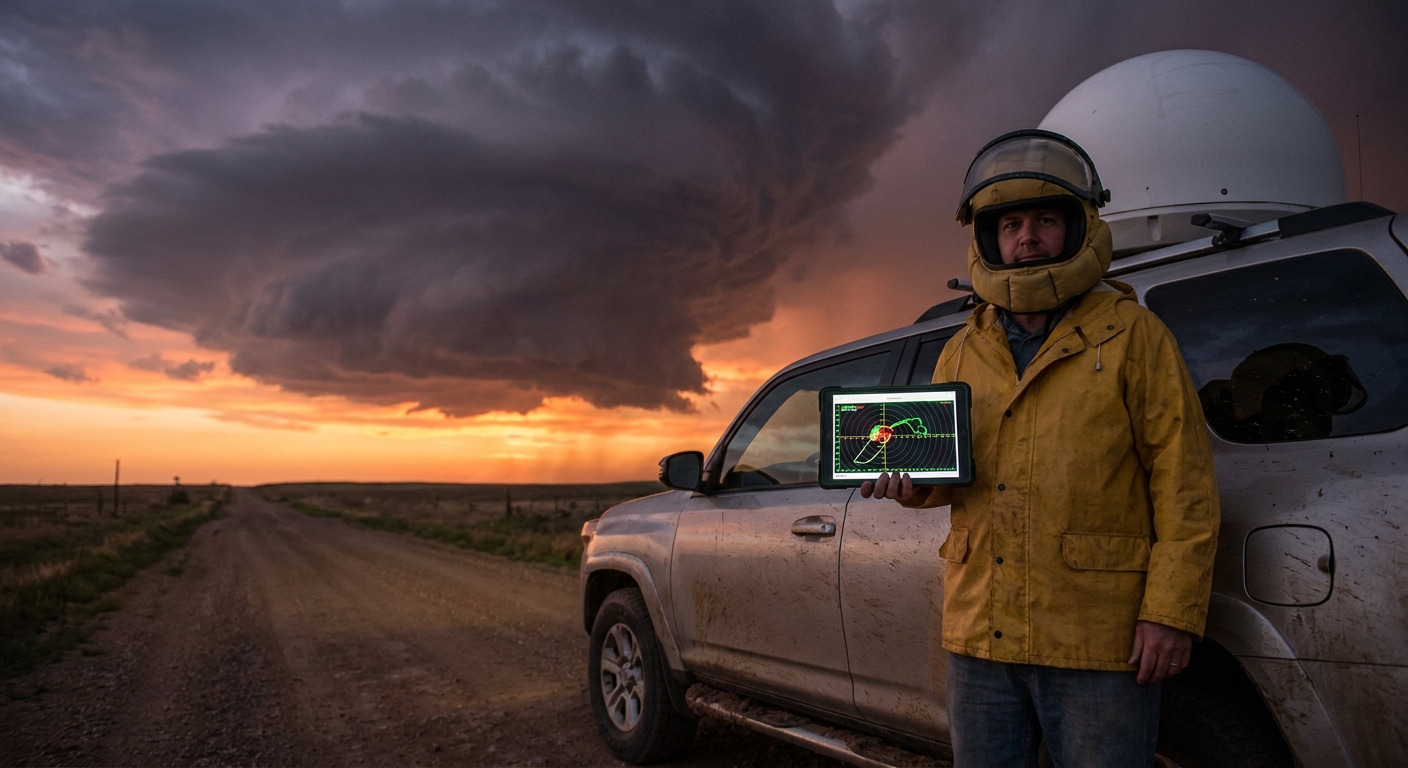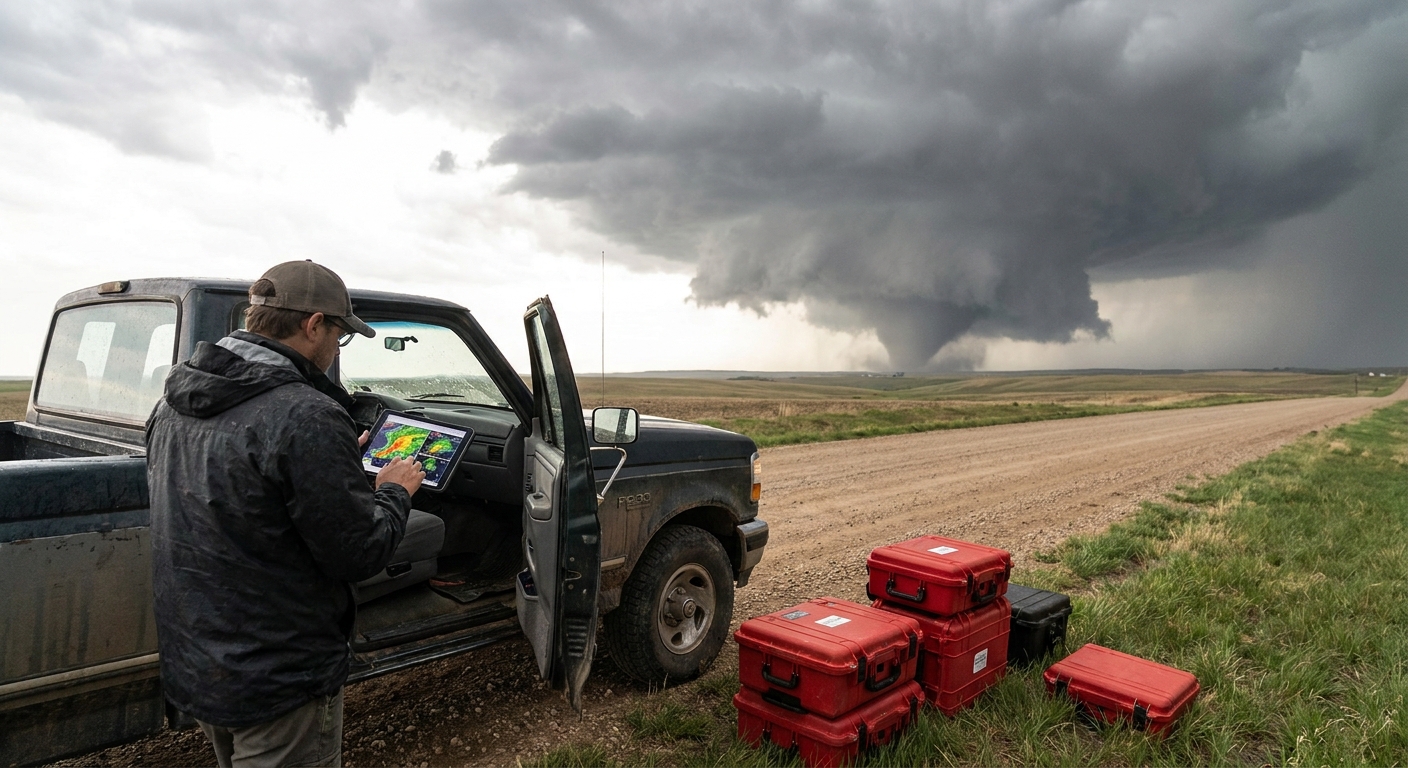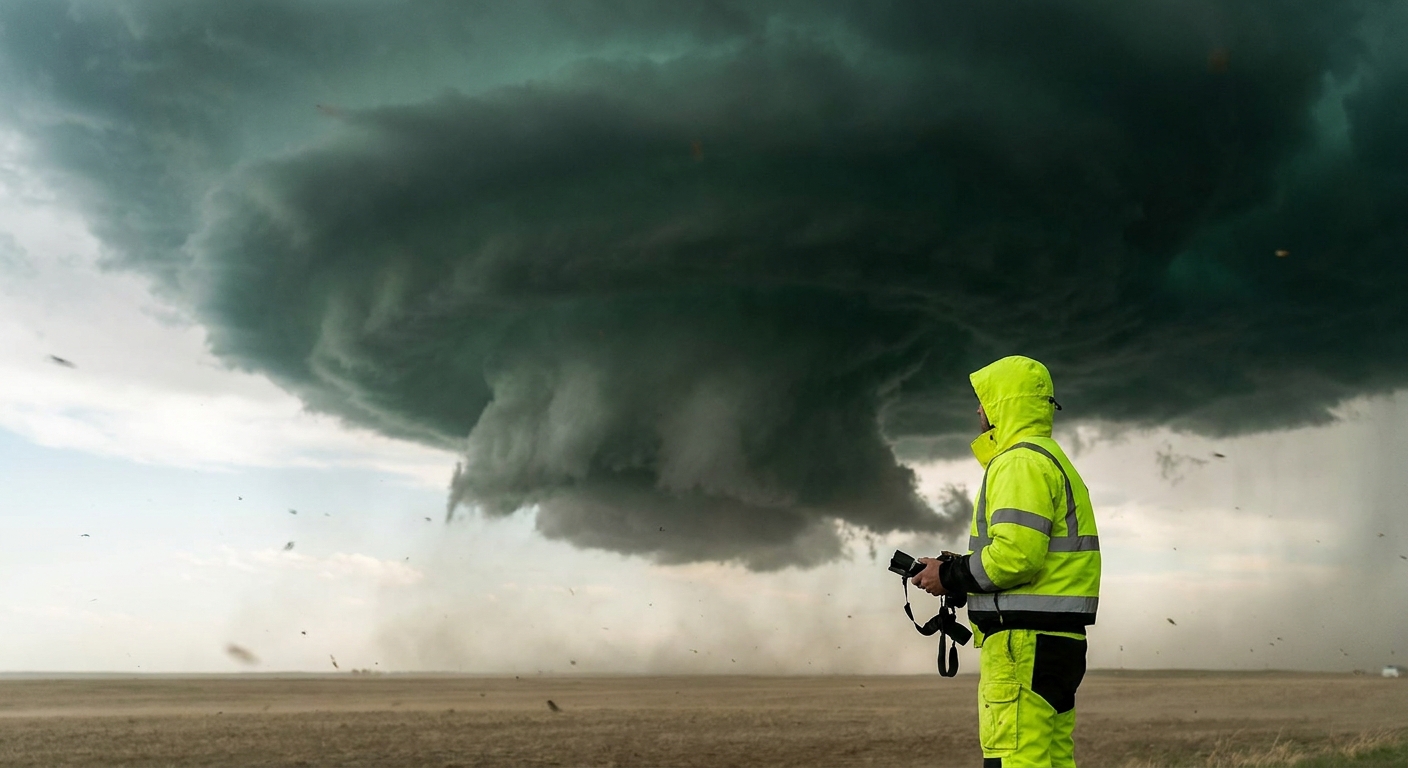
Before the first scan of the day, before the first towering cumulus punches through the cap, your most important piece of weather gear is the one you’re already wearing—your body.
Your Body Is the First Instrument in the Field
We tune radar, calibrate sensors, debug data feeds, but then walk out under 70 mph RFD winds in cotton hoodies and sneakers. That disconnect is dangerous.
When a supercell matures, it builds an environment that wants to strip away anything fragile—tin roofs, power lines, weak limbs, and yes, unprotected chasers. The armor you wear decides whether you can stay out long enough to witness the lifecycle of a storm—or retreat, wet, bruised, and rattled.
This is a layer-by-layer breakdown of personal weather gear for serious storm chasers and weather enthusiasts.
Base Layer: Thermoregulation in a Sky That Can’t Decide
1. Moisture-Wicking Base Layers
The same day can bring:
- Morning chill under stratus decks.
- Muggy, oppressive pre‑storm warmth.
- Sudden RFD cold blasts dropping temps 10–20°F.
Cotton kills comfort. Once soaked—from sweat or rain—it chills you fast when the RFD hits.
What to wear:
- Synthetic or merino wool base layers (long or short sleeve depending on season).
- Quick-dry fabrics that move sweat away from your skin.
Thermally stable chasers make calmer decisions. Being freezing or overheated turns minor choices into impulsive ones.
2. Breathable, Durable Pants
Jeans get heavy when wet and cling. Lightweight synthetics can shred in debris.
Look for:
- Nylon or softshell hiking pants with reinforced knees.
- At least one cargo pocket for radios, notepads, or emergency tools.
You will climb fences, crouch in ditches, and wade through post-storm mud. Dress accordingly.
Mid Layer: Shielding from Temperature Swings and RFD Blasts
1. Insulating Layer You Can Grab in Seconds
Storm atmospheres are thermodynamic laboratories. One minute you’re baking in T/Td spreads of 90/72°F, the next you’re under cold, dense RFD air plummeting toward 60°F with horizontal rain.
Have at hand:
- A packable fleece or synthetic insulated jacket.
- No bulky cotton hoodies that soak and stay wet.
Slip it on the moment RFD wraps, and you’ll be functional—not shivering—during the most critical visual observation window.
2. Windproof Softshells
Even before the rain, inflow winds can howl. Windchill saps attention.
A softshell jacket:
- Blocks wind without trapping too much sweat.
- Gives light abrasion protection from small debris.
Think of it as your storm “skin”—tough but flexible.
Outer Layer: Your Shell Against the Supercell’s Teeth
1. Hardshell Rain Jacket and Pants
When the forward flank or RFD skirts your position, precipitation is not gentle.
Proper storm shells should be:
- Waterproof and seam-taped.
- Long enough to overlap (no gap at the waist).
- Equipped with a strong hood that cinches without blocking peripheral vision.
Meteorological bonus: Staying dry means you remain outside longer, watching real-time structure—like the evolution of a wall cloud or rear-flank clear slot—rather than hiding in the cab while windows fog over.
2. Boots with Traction and Protection
Storm environments are obstacle courses:
- Muddy ditches.
- Slick grass slopes.
- Hidden debris (nails, glass, wire) in damage paths.
Choose:
- Waterproof boots with aggressive tread.
- Ankle support to prevent sprains while moving fast.
- Thick soles to resist punctures.
After one night chase walking through debris-strewn streets with glass crunching underfoot, I stopped thinking of boots as optional.
Impact & Debris Protection: When the Atmosphere Throws Hard Objects
1. Helmets: Hail, Debris, and Rollovers
Giant hail is not theoretical. It’s statistical inevitability if you chase enough.
Wear or keep within arm’s reach:
- Climbing or cycling helmets with adjustable fit.
Use cases:
- Core edges where tennis ball hail is possible.
- Post-storm damage surveys beneath compromised structures.
- Any time you park under old trees in high wind.
In a hail barrage, your vehicle roof will sound like a war drum. If glass goes, you want more than bare skin between you and jagged shards.
2. Eye and Face Protection
Two pieces of gear can save your eyesight:
- Wraparound, ANSI Z87.1-rated safety glasses.
- A light balaclava or neck gaiter you can pull over your mouth and nose in dust and glass.
In RFD dust storms or after a tornado has shredded buildings, the air itself becomes shrapnel.
Hands & Utility: Touching the Storm’s Aftermath Safely
1. Gloves for Debris and Cold Wet Metal
Have two glove types:
- Work gloves: Leather or cut-resistant for handling debris.
- Light thermal gloves: For cold conditions where dexterity matters.
When a town has just taken a hit, adrenaline invites you to help. Proper gloves let you do that without turning one cut into an infection days later.
2. Headlamps and Flashlights
Your clothing isn’t complete without light.
- A headlamp frees your hands for first aid or navigation.
- A pocket flashlight with a strobe can signal drivers in dense rain.
On night chases, light is both a navigation tool and a safety beacon.
Carry Systems: Keeping Gear Accessible Under Stress
1. Storm Vest or Compact Pack
You don’t want to dig in a trunk while a wall cloud is tightening.
Keep on your person:
- Radios or scanners.
- Notepad and pen or weather-proof field log.
- Multitool and seatbelt cutter.
- Phone backup battery.
A lightweight chest rig or vest keeps weight distributed and everything reachable.
2. Waterproof Pouches for Critical Electronics
Put phones, small radios, and notepads in:
- Zip pouches.
- Roll-top mini dry bags.
You will get unexpectedly drenched sooner or later. Consider water intrusion a when, not an if.
Night and Cold-Season Chases: Specialized Clothing Threats
1. Cold-Core and Winter Severe Gear
Cold-season severe events can be bitterly cold—especially with strong gradient winds.
Add:
- Insulated, windproof outerwear.
- Beanie that fits under your helmet.
- Heavier gloves.
Shivering through a line of embedded supercells will turn your radar analysis into guesswork.
2. Night Chase Hi-Vis Gear
At night, roads around warned storms become chaos.
Wear:
- Reflective vests or jackets.
- Bright colors instead of dark hoodies.
Your biggest threat on a rural road at 2 a.m. may not be the storm—it may be another distracted driver sliding on wet pavement.
How Personal Gear Interacts with Meteorological Reality
Personal weather gear isn’t fashion. It’s a system that works with the atmosphere:
- Thermal layers respond to temperature gradients created by fronts, RFDs, and cold pools.
- Waterproof shells let you stand in precip cores and visually confirm hail size, inflow structure, and storm motion.
- Impact and debris gear concede that storms create high-velocity projectiles.
When your body is secure, your mind is free to parse radar—checking reflectivity cores, velocity couplets, dual-pol signatures—without constant distraction from discomfort or pain.
A Chase Snapshot: When Storm Armor Earns Its Keep
On a classic dryline day in the Texas Panhandle, we watched towering CU explode into a striated supercell. As the storm cycled, we got brushed by a surging RFD—temps dropped, winds screamed, dirt turned the air sepia.
We stepped out in helmets, goggles, softshells, and boots to film the RFD clear slot cutting into the base. About 90 seconds later, a needle tornado condensed beneath a tightening wall cloud.
Without that gear, we’d have stayed in the vehicle, fighting fogged glass and windshield wipers, missing the birth of that tornado entirely.
Instead, we saw it from the open air, fully aware, fully protected—close enough to feel the atmosphere reconfigure itself.
Build Your Storm Armor Intentionally
Before you buy another sensor or camera, audit your personal storm armor:
- [ ] Moisture-wicking base layers
- [ ] Insulating and windproof mid layers
- [ ] Waterproof shells (jacket and pants)
- [ ] Waterproof, protective boots
- [ ] Helmets and impact-rated eye protection
- [ ] Work and thermal gloves
- [ ] Headlamp and flashlight
- [ ] Reflective night gear
We chase storms because they remind us how small we are—and how magnificent fluid dynamics can look when it wraps itself into a rotating tower of water and ice.
Dress like you intend to witness those moments again and again, not just once.
Your body is an instrument. Armor it accordingly, and the sky will show you its fiercest, most beautiful work.