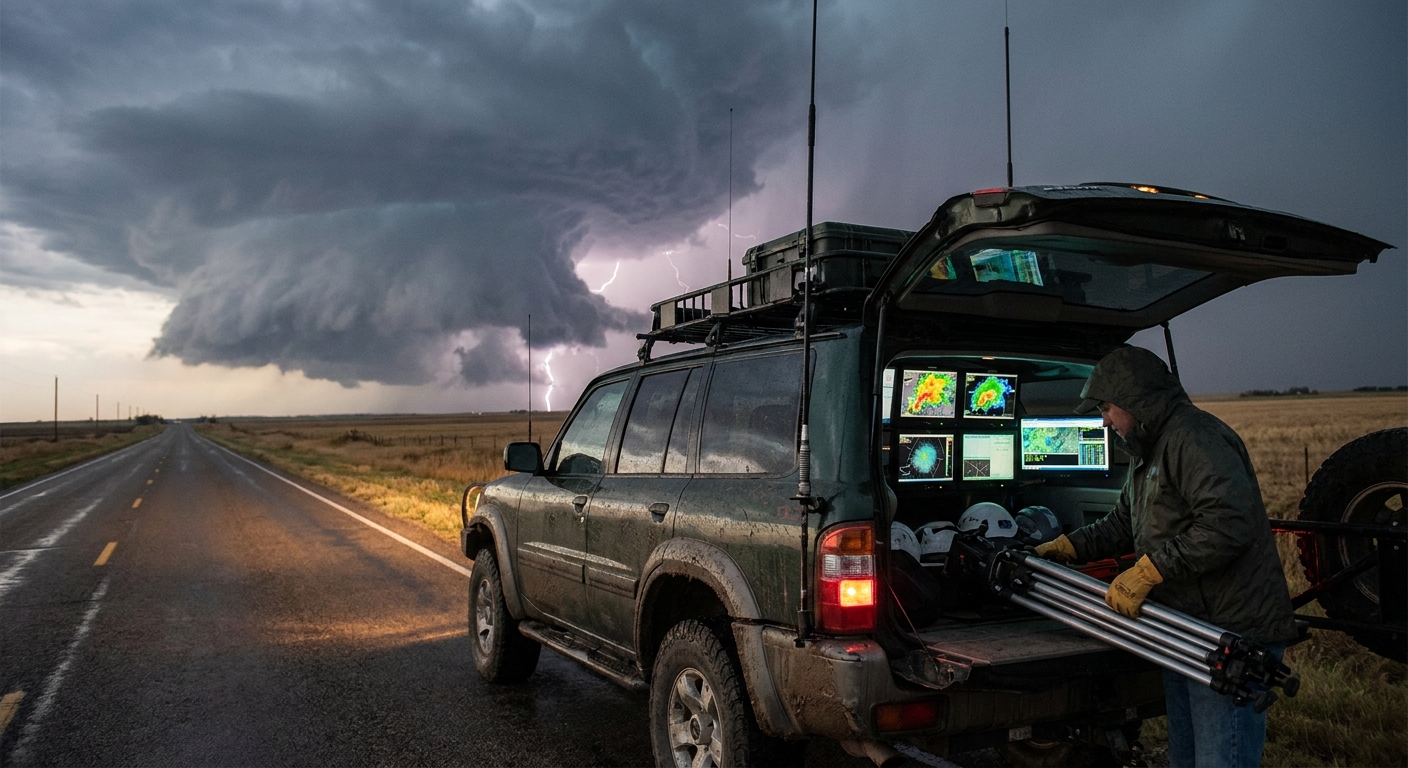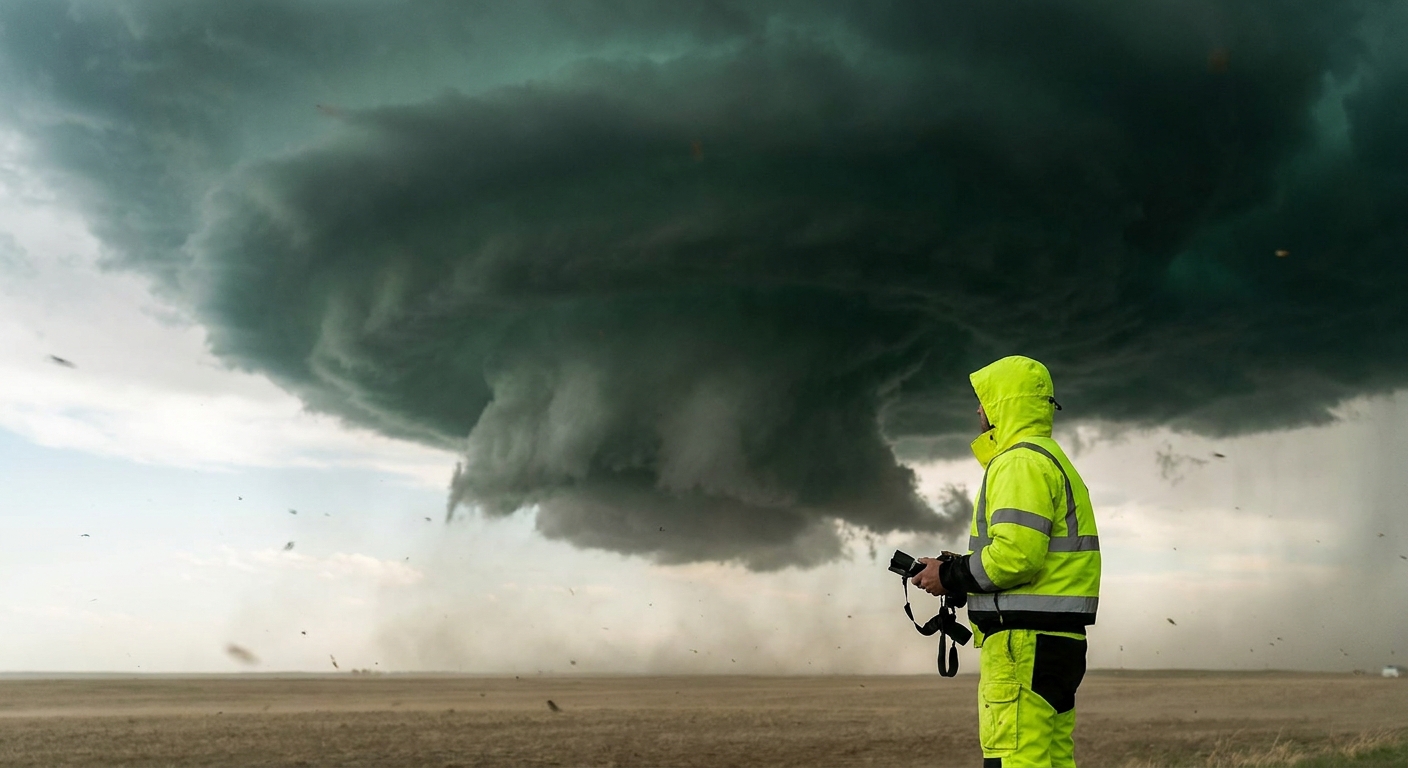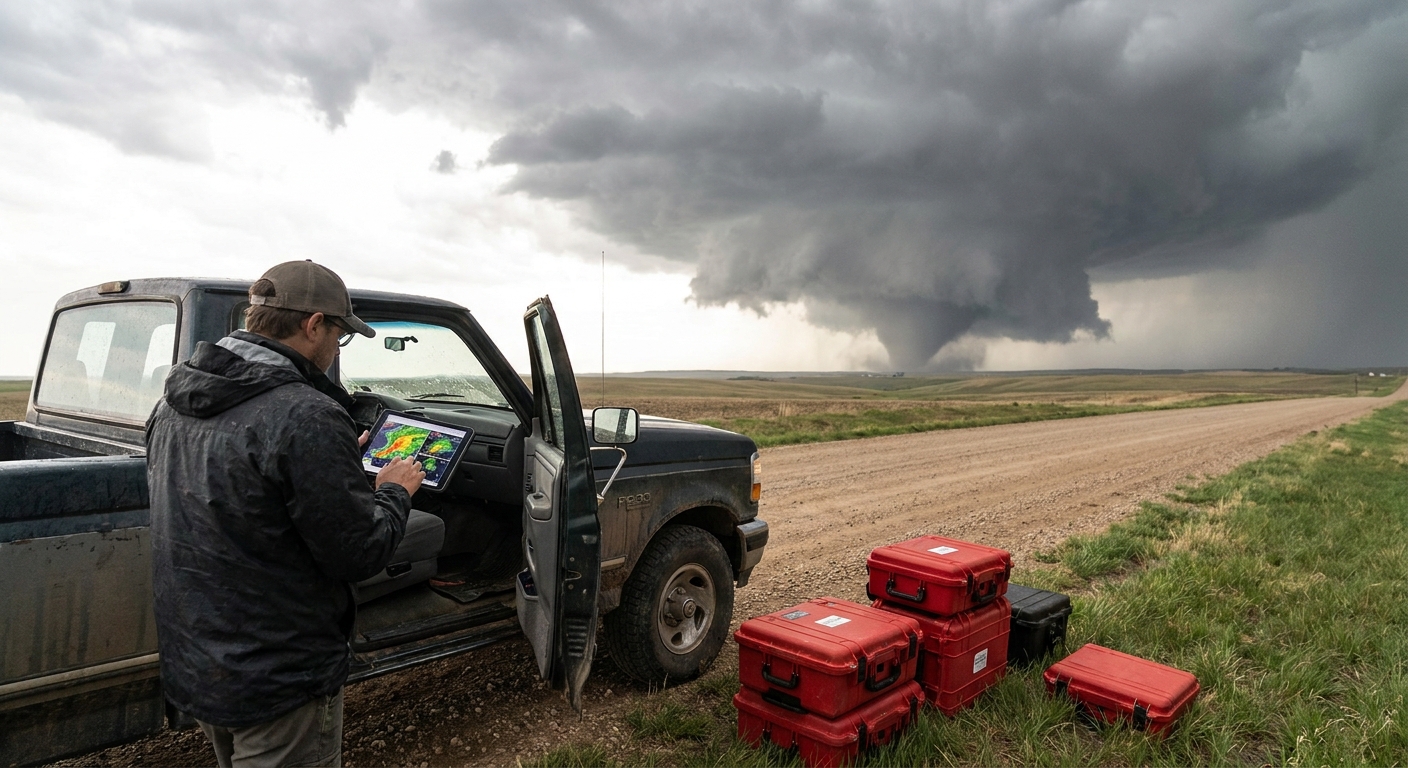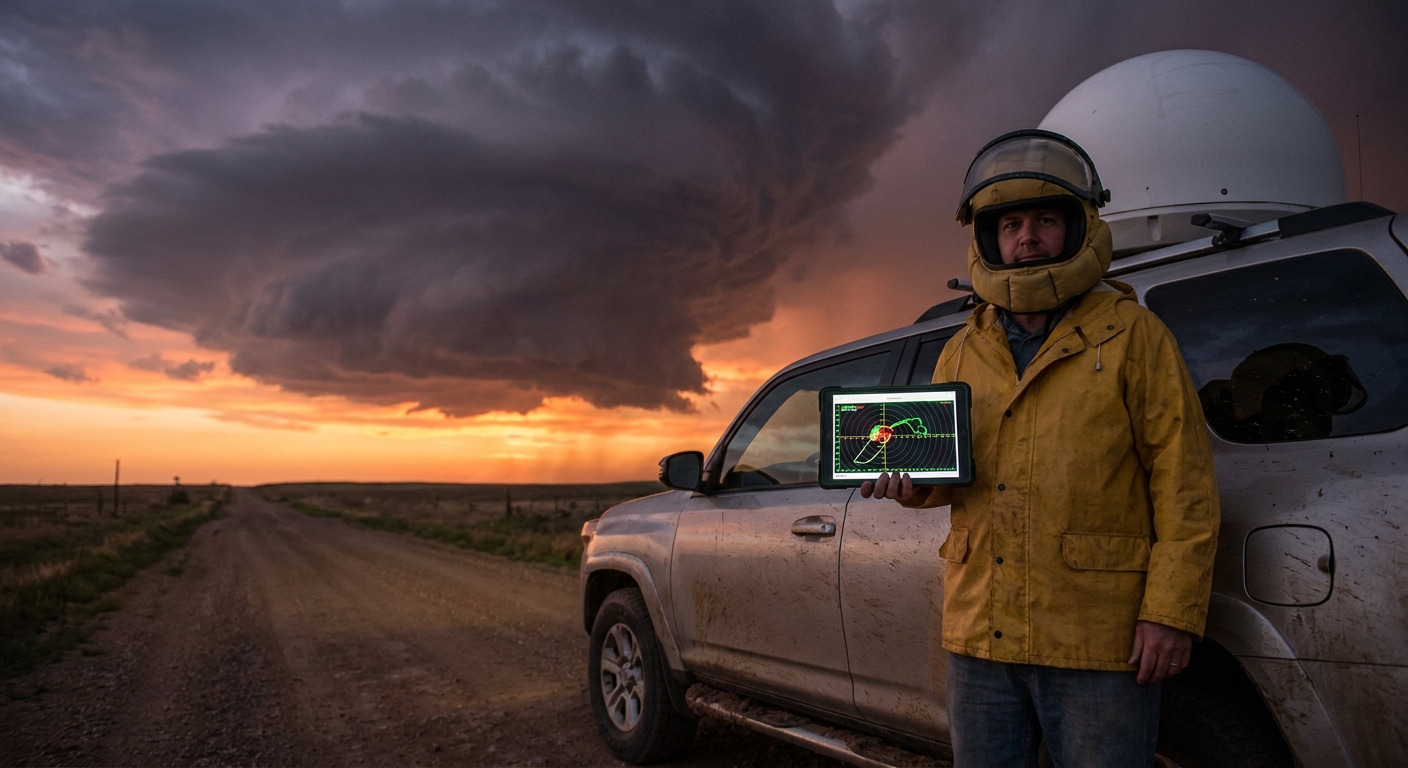
Every year the plains fill with new chasers whose rigs look like rolling electronics stores—LED bars, ten cameras, cheap anemometers stuck on magnet mounts—but when a storm goes HP and radar velocity lights up, they’re clueless about where to move.
The Myth of the "Gadget Chaser"
The truth is brutal: most gear is noise. A few pieces of equipment, used with real meteorological awareness, are everything.
This is a field guide to weather gear that actually matters—the stuff that changes how you read hodographs, how you survive hail, and how you interpret radar signatures when your window is just a wall of water.
Part 1: The Meteorologist’s Toolkit You Can Hold in Your Hands
1. Skew‑T and Hodograph Access: Your Pre-Chase Anchor
No, you don’t need a physical sounding balloon—but you need immediate access to soundings.
Gear/Apps to prioritize:
- Mobile apps or sites that serve:
- Skew‑T diagrams (temperature, dewpoint, lapse rates)
- Hodographs (wind speed/direction with height)
- Convective parameters (CAPE, CIN, SRH, shear)
Why this beats any gimmick gadget:
- A clean curved hodograph with 0–3 km SRH > 150 m²/s² tells you more about tornado potential than a dozen cheap sensors.
- Low LCLs and steep low-level lapse rates help you decide if your gear should be oriented for tornado intercept vs. big hail photography vs. lightning.
Before you check if your camera batteries are charged, check if the wind profile is tornadic.
2. Handheld Weather Meters with Logging
A solid handheld weather meter (Kestrel-class) with logging capability:
- Measures wind speed, gusts, temperature, humidity, and pressure.
- Records trends over time.
In the field:
- A sudden pressure fall can confirm you’re entering the mesocyclone’s influence.
- Sharp wind shifts flag the passage of an outflow boundary or RFD.
- Temperature drops confirm cold pool strength—key to storm mode transitions.
Log it, don’t just glance at it. Post-chase, you’ll align your meter data with radar time stamps and learn to feel the storm’s behavior.
3. Old-School Paper Maps
This sounds archaic until your entire caravan loses cell service in the Flint Hills.
Use paper maps to:
- Anticipate where river valleys, canyons, and trees will kill visibility.
- Plan escape routes that do not depend on a single highway.
- Mark typical dryline corridors and outflow boundary intersections for pattern recognition over seasons.
Paper maps never crash, overheat, or demand an update when you’re threading between two cores.
Part 2: Safety Gear that Keeps You Chasing Year After Year
1. Hail Helmets and Eye Protection
Hail is the most underestimated killer of gear and glass—and a real threat to you.
Carry for every chase occupant:
- A quality helmet (climbing, cycling, or ski) that fits.
- Wraparound impact-rated safety glasses.
Why this is non-negotiable:
- Giant hail can shatter side windows and shower you in glass and ice.
- Safety glasses prevent eye injuries that could permanently end your chase career.
On a 2021 HP monster in Nebraska, we took baseball hail while stair-stepping out of a wrap-around core. The difference between terror and injury was simple: helmets and glasses already within arm’s reach.
2. Seatbelt Cutters, Window Punches, and Fire Extinguishers
This is unglamorous gear—but crucial.
If you hydroplane into a ditch or get sideswiped in a panic exodus near a tornado warning, you may end up in a rolled or submerged vehicle.
Pack:
- A seatbelt cutter + spring-loaded glass punch mounted within reach of the driver.
- A compact ABC-rated fire extinguisher.
Storms inflame human error—congested roads, high stress, poor visibility. Prepare like you’ll need to self-rescue.
3. Lightning-Aware Gear Choices
You cannot beat lightning, but you can manage risk.
- Avoid unnecessary metal roof racks that increase your profile on open plains.
- Use window mounts for cameras instead of standing outside.
- Keep a pair of rubber-soled boots and avoid being the tallest object in a field.
Gear that encourages you to stay inside the Faraday cage of your vehicle is safer than tripods that lure you into open pastures.
Part 3: Radar Tools That Turn Data into Positioning Power
1. Multi-Tilt, Multi-Product Radar Apps
Look for apps/software with:
- Multiple reflectivity tilts.
- Base velocity and storm-relative velocity.
- Dual-pol products (CC, ZDR).
- High refresh rates (especially in rapidly evolving supercells).
In a live chase:
- Low-level velocity shows tightening meso signatures and gate-to-gate shear.
- Mid-level reflectivity reveals BWERs and updraft quality.
- Dual-pol CC reveals debris signatures—proof of tornado on the ground even if rain-wrapped.
Combined with GPS, these products dictate whether you flank south, punch the core, or bail.
2. GR-Level Software vs. Simple Apps
If you’re serious about chase strategy, invest in advanced PC-based radar software (e.g., Gibson Ridge products) when possible.
Advantages:
- Customizable color tables to highlight subtle rotation.
- Storm-relative motion vectors overlaid on your position.
- Cross-sectional views and time series loops.
It’s the difference between watching a weather broadcast and being inside your own private forecast office on wheels.
Part 4: Camera & Documentation Gear with Scientific Purpose
1. High-Frame-Rate Video and Stabilization
Video is more than entertainment.
- High-frame-rate cameras capture fast-evolving features: subvortices, suction vortices, RFD surges.
- Stabilized footage lets you later measure motion and estimate wind speeds using known objects.
Mount cameras so you can keep driving. If you have to step out to film, you are tempting fate.
2. Time-Stamped Logs and Voice Notes
Combine your gear with disciplined logging.
Options:
- Voice recorder or phone app to log:
- Time
- Location
- Observed structure
- Wind, hail size, visibility
- Sync these logs with radar frames post-chase.
Over time, you’ll build a mental catalog: “That specific RFD smell, that wind shift, that radar look—this is about to go tornadic.”
Part 5: How to Prioritize Gear Purchases (Chaser Maturity Model)
If you’re building a kit over time, use this order:
Safety first:
- Helmets, safety glasses, first-aid kit, cutters, extinguishers.
Navigation and radar:
- Reliable GPS, high-quality radar app/software, backup data source.
Meteorological awareness:
- Skew‑T/hodograph access, handheld weather meter.
Documentation:
- Dash cams, stabilized video, voice logging.
Extras:
- Drones, fancy rigs, cosmetic lighting.
Chasing is not about looking cool. It’s about coming home with stories, footage, and a deeper understanding of the sky.
The Storm Will Always Outclass You—So Respect It
One of my most sobering days was a high-shear, low-CAPE setup in the Deep South. Hodographs were sickle-shaped, low LCLs, 0–1 km SRH through the roof. The soundings screamed danger.
We equipped accordingly: radar-centric, no core punching, constant escape route awareness. A rain-wrapped tornado crossed the road a mile ahead—completely invisible—but the radar velocity couplet and our logged pressure fall had warned us minutes before.
The only reason we weren’t in that crossing was the gear and the discipline to believe it.
You will never “beat” the atmosphere. Your goal is to listen better—through sensors, cameras, and radar—and to survive long enough to see a hundred more supercells.
Choose gear that sharpens your senses and protects your body. Leave the rest for the catalog photos.