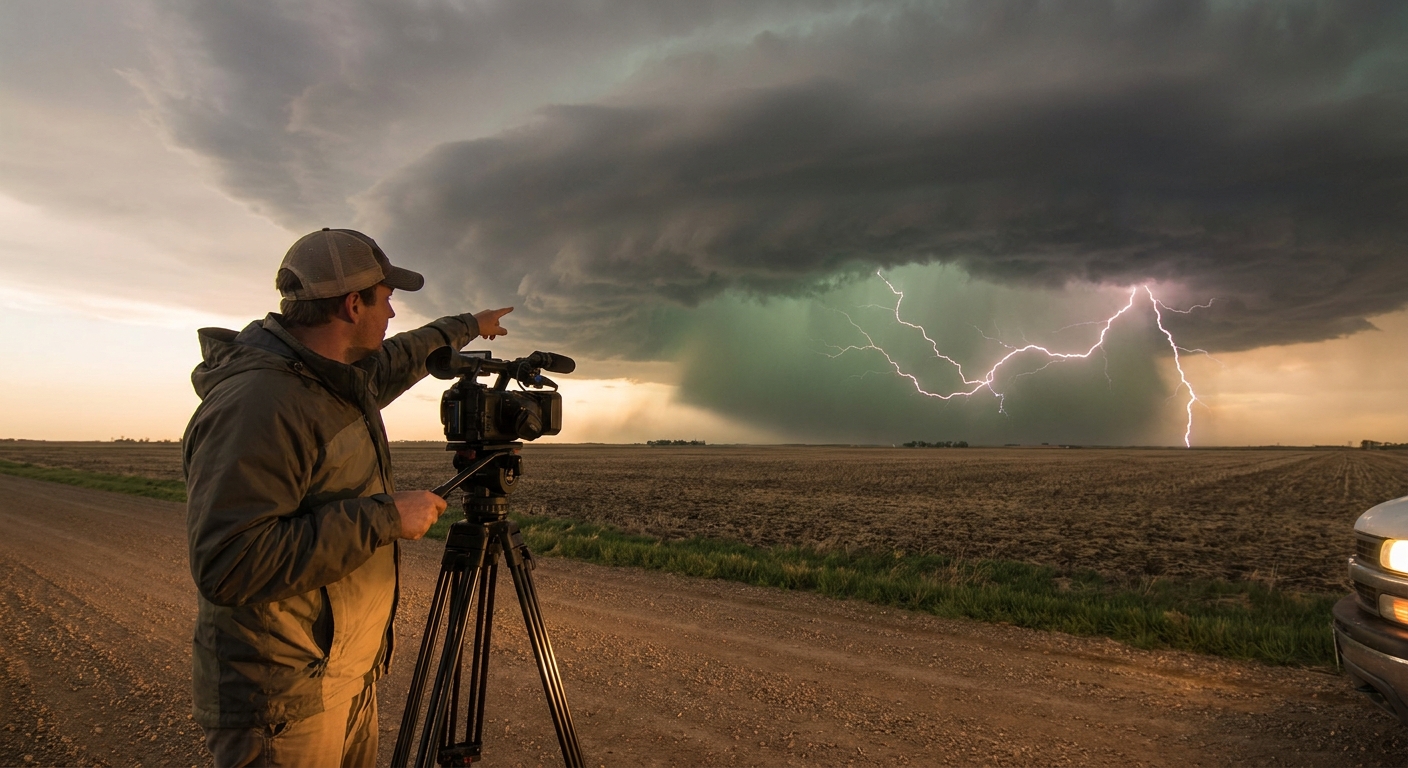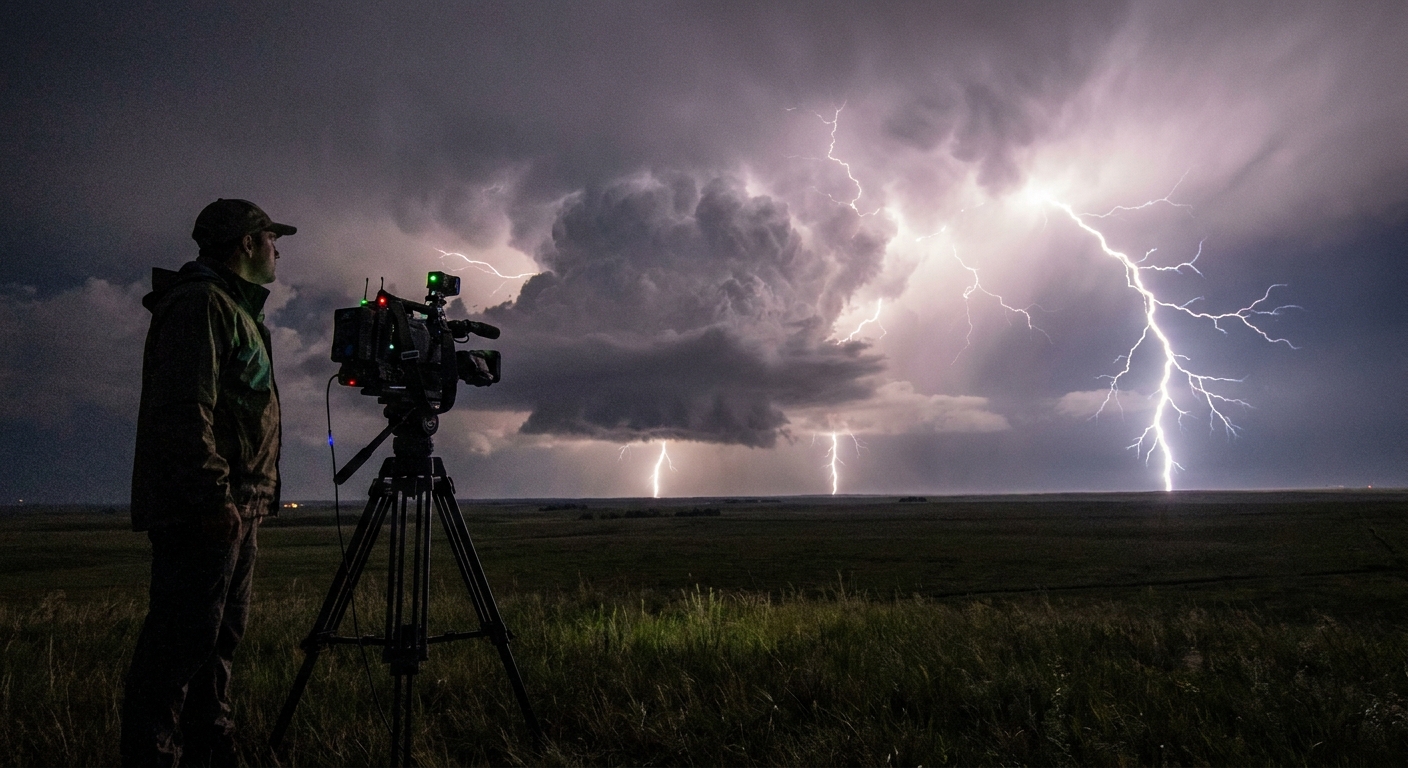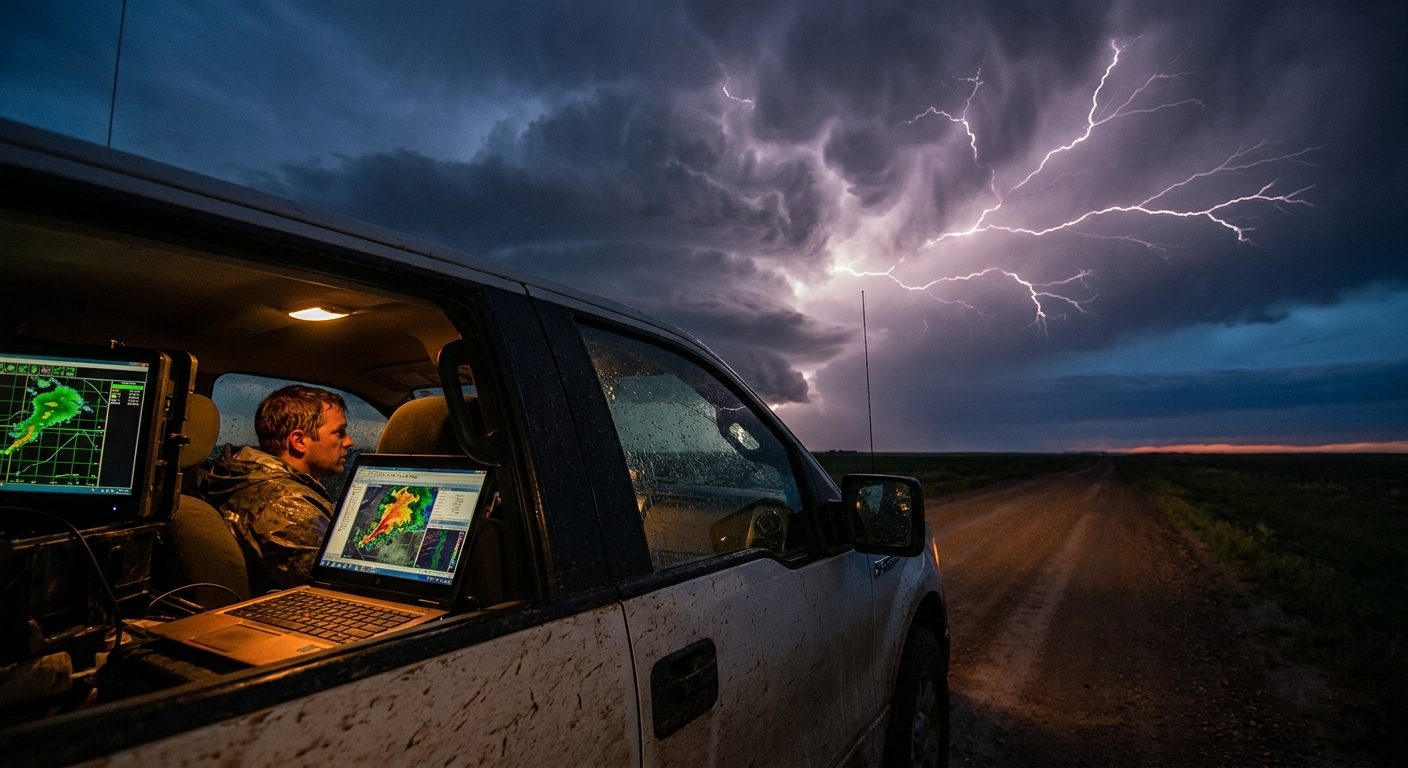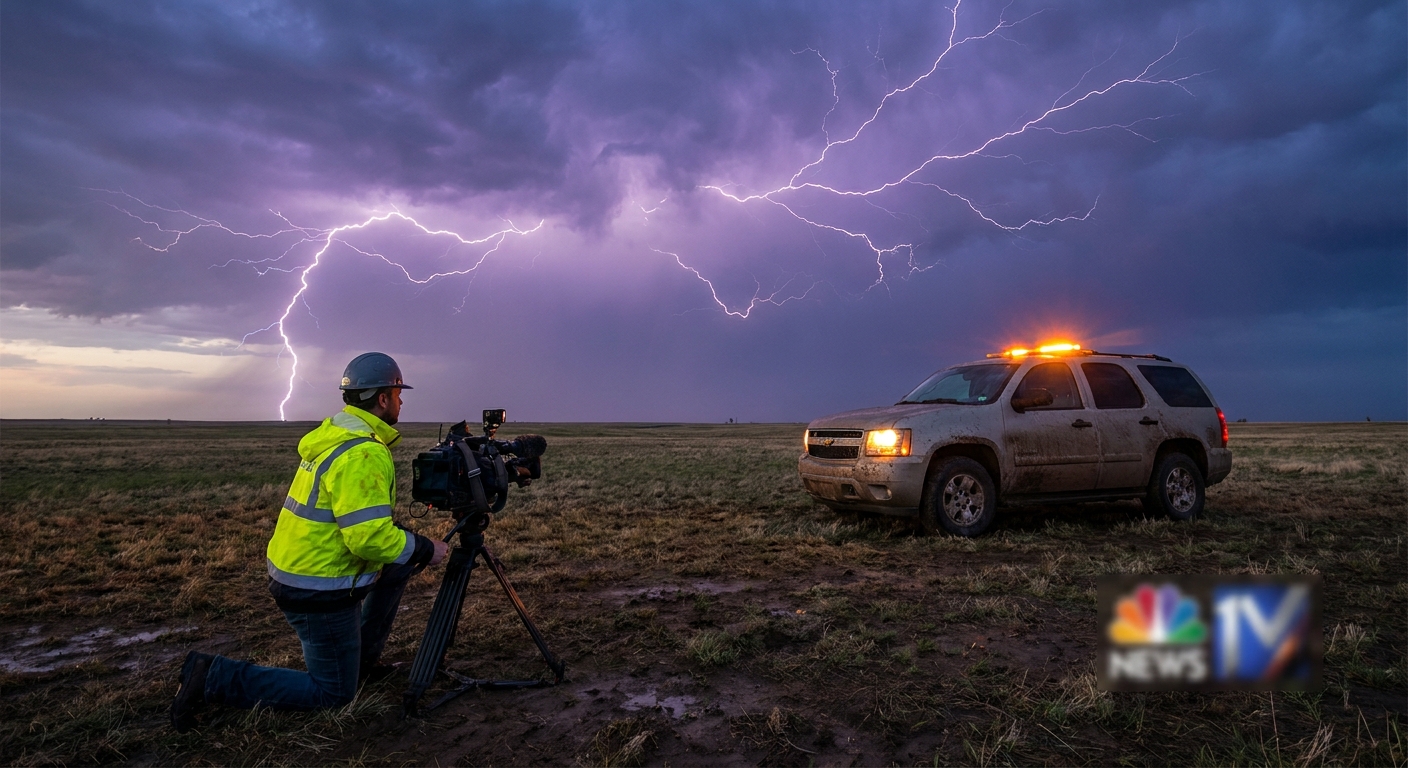
Lightning is the ultimate storm chaser paradox. It’s the most photogenic and the most unforgiving. You can flirt with an HP core, weave around hail, and still get home — but gamble wrong with lightning and there is no second chance.
The Temptation and the Risk
The goal isn’t to be fearless. It’s to be calculated — to get the shot, log the data, and stay alive to chase the next setup. This is the safety protocol I’ve refined over hundreds of chase days and countless electric nights.
Understanding the Threat: What Lightning Actually Does to a Human Body
When lightning strikes:
- Voltage can exceed 100 million volts
- Current can peak above 30,000 amps
- Temperatures inside the channel can hit 30,000°C (54,000°F)
The danger isn’t just a direct hit. Near strikes can:
- Send ground current through your legs
- Travel along side flashes into nearby objects
- Jump via contact potential from fences, vehicles, tripods, and cameras
Cardiac arrest, respiratory paralysis, and severe neurological damage can happen in a single microsecond. Survival is often random — prevention can’t be.
Lightning Types Chasers Need to Respect Differently
1. Cloud-to-Ground (CG)
These are the obvious killers.
- Tend to originate from mid-to-lower charge regions
- Can strike ahead of or behind the main core
- Peak risk zone: under and near the heavy precip shafts and just downstream from the main updraft
2. Positive Cloud-to-Ground (+CG)
The assassins of the lightning family:
- Often come from the upper positive charge region in the anvil
- Travel longer distances, carry more current
- Frequently appear as “bolts from the blue” miles away from rain
If you’re under blue sky but within a few miles of an anvil, you are not safe.
3. Intra-Cloud (IC) / Cloud-to-Cloud (CC)
These seem less threatening, but they’re warnings:
- Indicate the storm is highly electrified aloft
- IC frequency often precedes an increase in CG activity
If ICs are strobing continuously overhead, take it as the storm’s evacuation notice.
Pre-Chase Lightning Planning: Don’t Wing It in the Field
Before you fire up the engine:
Know your data sources
- Radar with lightning overlay if possible - Real-time lightning networks (apps/web viewers) - Satellite for storm-top growth
Mark safe corridors on your route
- Prefer well-traveled paved roads over dirt when lightning cores threaten - Note larger towns with substantial buildings for emergency shelter
Decide your stop-loss conditions
- Maximum acceptable proximity of frequent CG (e.g., under 10-second thunder) - Photography cut-off: when to pull tripods and drones no matter what the shot looks like
Write it down or verbalize it with your chase partner before you roll. In the field, adrenaline will push you to cheat.
The Active Chase: Lightning Risk Assessment on the Fly
Your brain should constantly be running a simple loop:
Where is the updraft? Where is the core? Where is the anvil spreading? Where are strikes clustering?
1. Use Radar to Map the Electric Footprint
- Core (highest dBZ): Primary CG cluster, especially on the forward flank
- Anvil spread direction: Prime territory for +CGs and anvil crawlers
- Updraft region (vault, bounded weak echo region): Can have intense ICs and CGs near the base
Overlaying lightning detections (when available) quickly shows which flank is “hot.” That flank is where you limit outside exposure.
2. Observe Flash-to-Thunder Timing
While you’re outside:
- Count interval between visible flash and first thunder
- Under 30 seconds = within about 10 km (6 mi)
- Under 10 seconds = dangerously close
Once you’re consistently under 10 seconds, your priority should shift to minimizing time outside the vehicle.
3. Watch for Pattern Changes
Red flags:
- Storm transitions from low-frequency ICs to frequent CGs
- +CGs begin landing ahead of the core, closer to your inflow position
- Bright, blinding return strokes with immediate cracking thunder
Any one of these is a cue to tighten your safety radius.
Camera, Tripod, and Vehicle Protocols That Keep You Alive
1. The Vehicle Rule: Steel Over Skyline
- Stay inside the vehicle during peak lightning phases whenever possible
- Shoot from window mounts or partially open windows — not fully outside with doors open
- Avoid touching door frames or any obvious metal while shooting
If the vehicle is struck, the metal shell will route most current around you, provided you’re not forming a bridge from metal to ground.
2. Tripod Placement and Handling
Tripods are risk multipliers:
- Never be the highest object with a raised tripod in a flat field
- Avoid setting tripods near fences, power poles, or lone trees
- If thunder is <10 seconds, collapse and stow tripods — shoot handheld or from inside the car
When lightning rates spike, I often leave the tripod folded next to me, ready but not deployed until rates ease.
3. Drones and Kites: Don’t
Flying metal and electronics into a charged sky is an obviously bad idea, yet I still see it.
- Do not fly drones anywhere under heavy IC/Cg activity
- Land immediately if lightning picks up while airborne
The storm does not care about your cinematic ambitions.
Micro-Level Situational Awareness: Your Body as a Sensor
There are moments when the atmosphere around you changes.
Pay attention to:
- Sudden quiet in wind and ambient noise
- Hair standing up, skin tingling
- Crackling or buzzing sounds near metal objects
These can indicate an intense electric field buildup nearby — you’re inside the kill zone.
If this happens and you are caught outside:
Drop any metal objects
Crouch low on the balls of your feet, heels together
Minimize ground contact and body height
Move to your vehicle the moment it’s safe to dash
Do not lie flat — that maximizes ground contact for current to pass through.
Post-Strike Response: When Lightning Hits Close or Hits Someone
If someone is struck:
- They do not carry a charge; it is safe to touch them
- Call emergency services immediately
- Begin CPR if they are unresponsive or not breathing
Lightning kills by stopping heart and breathing — rapid CPR can restart both. The most critical factor is how quickly you start.
If a strike hits your vehicle:
- Stay inside until CG activity subsides a bit
- Check electronics only after you’re confident no follow-up strikes are imminent
A Field Story: The Night I Learned to Respect the Anvil
One June evening in eastern Colorado, we were sitting under blue sky, west of a tornadic supercell by almost 15 miles. The storm’s anvil had spread overhead, and we were watching distant CGs slam behind the rain core.
We set up tripods in what felt like a “safe” zone.
Out of nowhere, a blinding +CG detonated in the field barely 200 meters away. The sound hit like a shotgun at point-blank range. Cameras shook, car alarms howled down the road, and the smell of ozone burned our noses.
Blue sky. No rain. No overhead tower in view.
We broke down gear in seconds and spent the rest of that night shooting from the vehicle. That strike redrew my personal radius around any storm with a spreading anvil.
The Takeaway: Chase Smart, Not Lucky
Lightning is not a background effect; it’s a primary hazard with zero tolerance for mistakes. The urgent truth is this: you will have close calls if you chase long enough, but you can drastically reduce how close they get.
If you:
- Use radar and lightning data to map risk zones
- Enforce your own distance and exposure rules
- Treat your vehicle as a mobile shelter, not just transport
- Respect the anvil as much as the core
…you’ll still capture the electric fury of supercells — but you’ll do it from a position where awe does not have to share space with regret.
Chase the live wires of the sky, but don’t become part of the circuit.